Home Sleep Study Melbourne vs Lab Testing: Which Is More Accurate?
The best choice depends on what needs to be measured, how complex the symptoms are, and whether there are safety concerns that require supervised monitoring.
Which test is “more accurate” overall?
In-lab sleep testing is typically more accurate because it measures far more signals at once and does so under clinical supervision. A home sleep study Melbourne patients choose can be very accurate for straightforward obstructive sleep apnoea cases, but it may miss issues that require deeper brain, muscle, and movement monitoring.
Accuracy is not one single number here. It depends on what condition they are trying to confirm or rule out.
What does an in-lab sleep study measure that a home test often can’t?
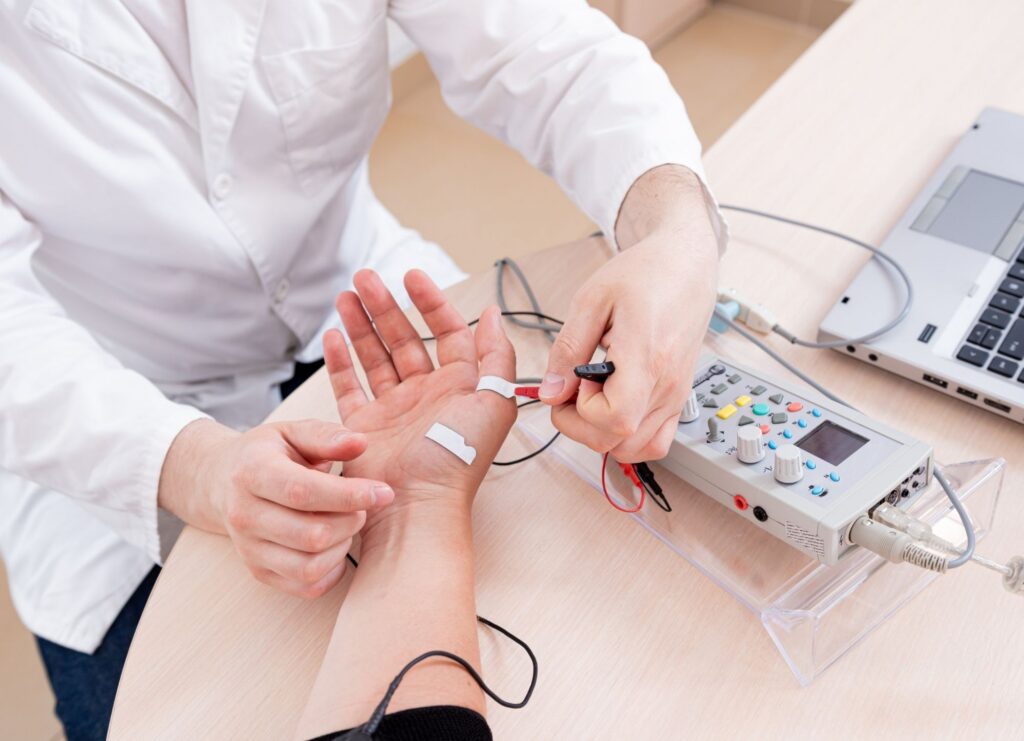
A lab study (polysomnography) usually records brain waves (EEG), eye movements, muscle tone, heart rhythm, breathing effort, airflow, oxygen levels, snoring, and body position. Because sleep stages are recorded, clinicians can link breathing events to actual sleep, not just “time in bed.”
That sleep staging is a big reason lab tests can be more precise, especially when symptoms are complex.
What does a home sleep study in Melbourne typically measure?
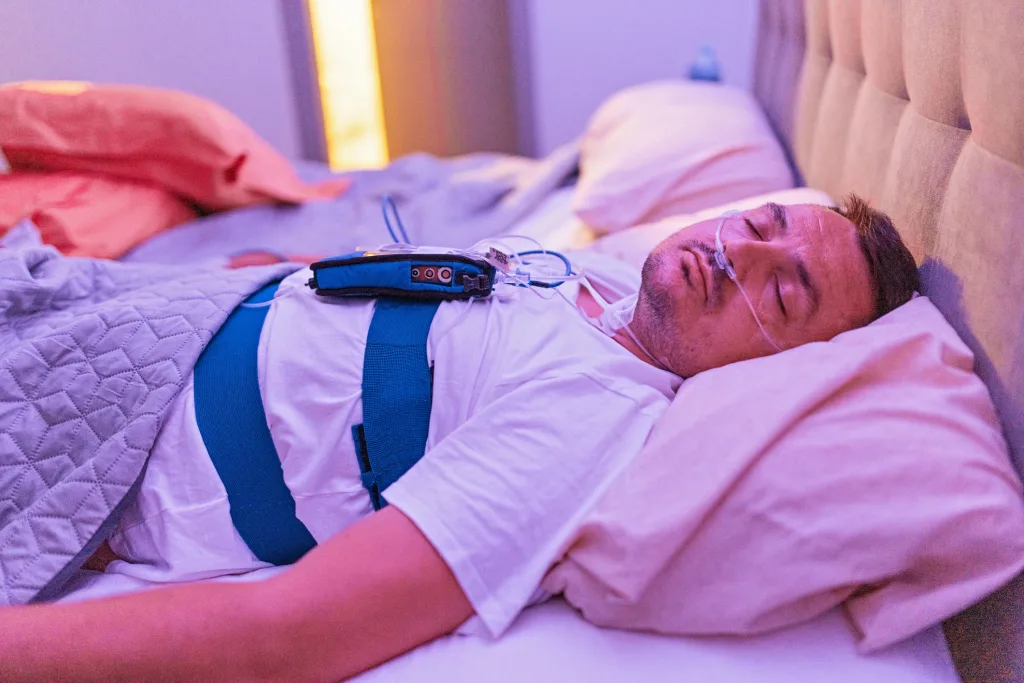
Most home studies (often called HSAT) focus on breathing and oxygen: airflow, oxygen saturation, respiratory effort, pulse, and sometimes snoring and position. This narrower data set can still be enough to diagnose obstructive sleep apnoea for many people, especially when the pre-test probability is high.
However, home tests commonly do not confirm sleep stages, so the “event rate” can be estimated less precisely in some cases.
How does the lack of sleep staging affect home test accuracy?
Without EEG-based sleep staging, many home tests use recording time rather than true sleep time. If they lie awake for long periods, the test may underestimate severity because events are divided by a larger time window.
This is one of the most common ways a home study can look “milder” than a lab study, even when symptoms feel significant.
Are home sleep studies accurate enough to diagnose sleep apnoea?
For suspected obstructive sleep apnoea, home sleep studies are often accurate enough when symptoms and risk factors strongly fit the picture. They tend to perform best for moderate to severe cases and can be less reliable for mild disease.
If the home study is negative but symptoms remain convincing, many clinicians recommend moving to an in-lab study rather than assuming nothing is wrong.
When can home sleep studies be less accurate or misleading?
Home tests can be less accurate when there are multiple sleep problems happening at once or when signals are likely to be lost. Poor sensor placement, detached probes overnight, and unusual breathing patterns can all reduce reliability.
They can also miss or under-detect disorders that require brain or limb monitoring, such as certain movement-related sleep disorders.
Which conditions are better assessed in a sleep lab?
Lab testing is usually preferred when clinicians suspect central sleep apnoea, parasomnias, nocturnal seizures, complex insomnia, REM behaviour disorder, or significant periodic limb movements. It is also commonly chosen when there is major heart or lung disease, neuromuscular conditions, or safety concerns.
In those cases, “more accurate” also means “safer” and more clinically complete.
Does a lab study always reflect normal sleep?
Not always. Some people sleep differently in a lab, especially on the first night, due to the unfamiliar environment and extra sensors. Even so, the breadth and quality of data often outweigh this limitation, and experienced labs interpret results with this in mind.
For many patients, the issue is not whether they sleep perfectly, but whether enough quality data is collected to answer the clinical question.
What about convenience and speed in Melbourne?
Home studies are usually faster to arrange and easier to complete, which can reduce time to treatment when symptoms are clear. Lab studies can involve longer wait times, overnight attendance, and more steps in the pathway.
If they need answers quickly and their presentation is straightforward, home testing can be a practical first step.
How should they choose between home and lab testing?
A common approach is: home study first for classic obstructive sleep apnoea symptoms, and lab testing first for complex symptoms or higher medical risk. If the home result conflicts with how they feel, escalation to a lab test is often the next move.
The most accurate pathway is the one matched to their symptoms, comorbidities, and likelihood of obtaining clean data the first time.
What is the simplest takeaway on accuracy?
Lab testing is the most accurate and comprehensive option overall. Home sleep studies in Melbourne can be highly accurate for diagnosing obstructive sleep apnoea in appropriate patients, but they are not designed to capture every sleep disorder.
If accuracy is defined as “getting the right diagnosis on the first attempt,” the best choice is the test that fits the clinical picture, not just the most advanced equipment. Click here to learn about bulk-bill sleep study Melbourne: 4 things to check before booking.
FAQs (Frequently Asked Questions)
Which sleep test is more accurate overall: home sleep study or in-lab sleep test in Melbourne?
In-lab sleep testing is generally more accurate overall because it measures a broader range of signals simultaneously under clinical supervision. While home sleep studies are highly accurate for diagnosing moderate to severe obstructive sleep apnoea in the right patients, they may miss complex conditions that require deeper brain, muscle, and movement monitoring.
What specific measurements does an in-lab sleep study capture that a home sleep study typically cannot?
An in-lab sleep study (polysomnography) records comprehensive data including brain waves (EEG), eye movements, muscle tone, heart rhythm, breathing effort, airflow, oxygen levels, snoring, and body position. This allows clinicians to accurately link breathing events to actual sleep stages rather than just time spent in bed, enhancing diagnostic precision especially for complex symptoms.
What parameters are usually measured during a home sleep study in Melbourne?
Home sleep studies often focus on breathing and oxygen-related parameters such as airflow, oxygen saturation, respiratory effort, pulse rate, and sometimes snoring and body position. This narrower data set can effectively diagnose obstructive sleep apnoea for many individuals with high pre-test probability but does not typically include detailed sleep staging.
How does the absence of EEG-based sleep staging affect the accuracy of home sleep studies?
Without EEG-based sleep staging, home tests estimate event rates based on total recording time rather than actual sleep time. If a patient spends significant time awake during the test, this can lead to underestimating the severity of their condition because events are averaged over longer periods than true sleep duration.
Are home sleep studies reliable enough to diagnose obstructive sleep apnoea?
Yes, home sleep studies are often sufficiently accurate for diagnosing moderate to severe obstructive sleep apnoea when symptoms and risk factors align clearly. However, they may be less reliable for mild cases or when symptoms are complex. In cases where home study results are negative but symptoms persist, an in-lab study is usually recommended for confirmation.
When should a patient opt for an in-lab sleep test over a home study in Melbourne?
In-lab testing is preferred when symptoms are complex or multiple disorders are suspected—such as central sleep apnoea, parasomnias, nocturnal seizures, REM behaviour disorder, or significant limb movements—as well as when there are major heart or lung diseases or neuromuscular conditions. It also provides safer and more comprehensive monitoring under clinical supervision.